 New Ability Energy
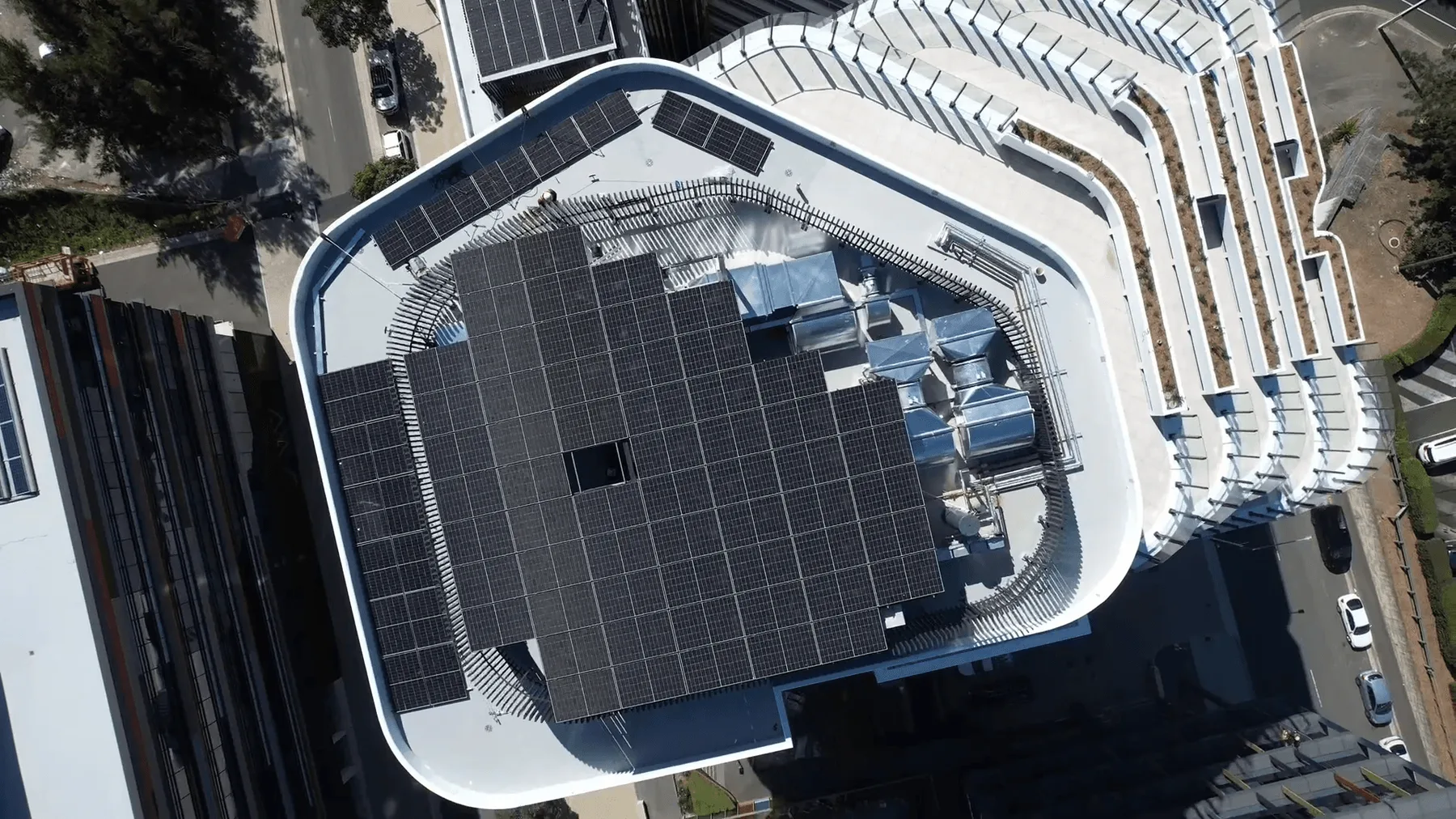
Which battery incentive does your site fall under?
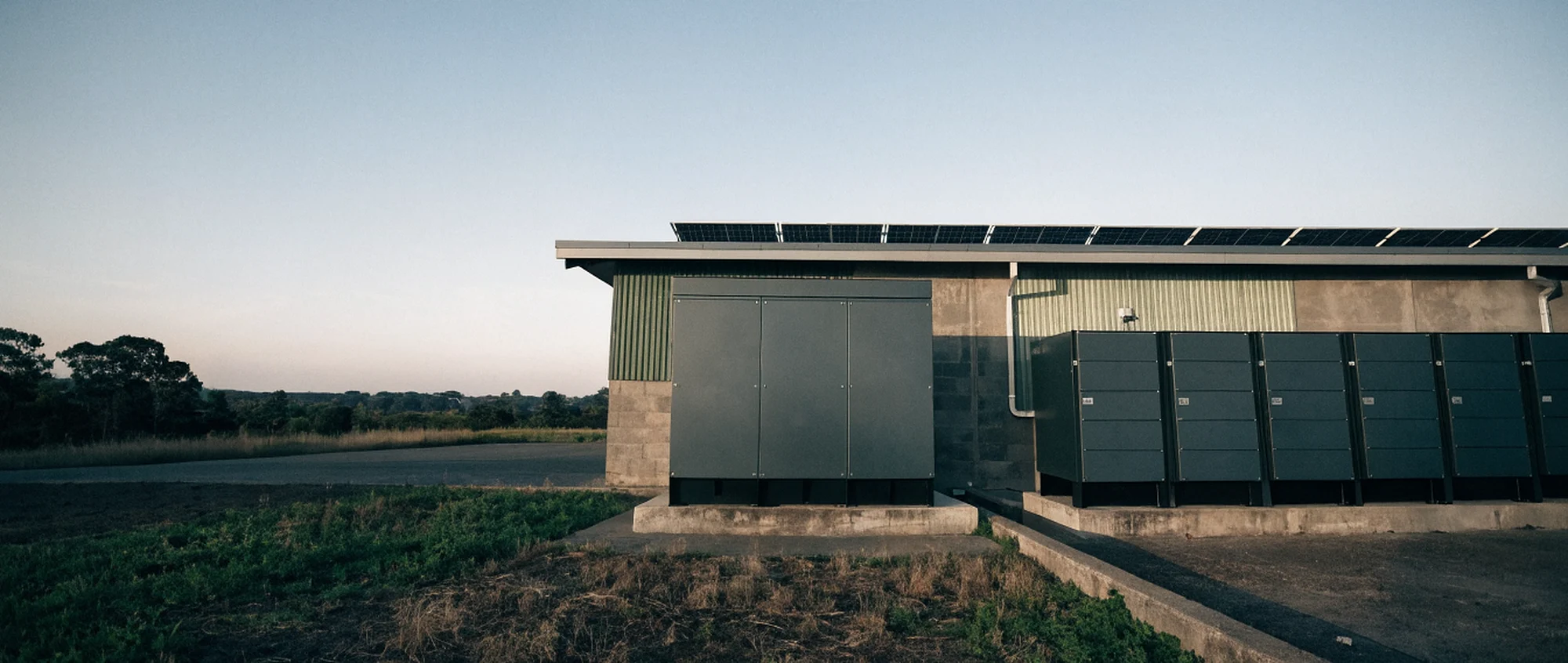
From 1 September 2026 NSW runs three commercial battery incentives. They are not three tiers of one scheme. Three questions decide which one applies to your site.
The short version
From 1 September 2026, NSW runs three commercial battery incentives. They are separate activities, with separate eligibility, separate capacity bands and separate conditions. The one that applies to your site is decided by what the building is and how much storage you are installing, not by what industry you are in.
That distinction does a lot of work, and it is why most people who go looking for a straight answer come back an hour later without one.
Three questions decide it. What is the building: an apartment block, a business premises, or a commercial or industrial site. How much usable capacity is the battery, usable rather than nameplate. And is there solar on site, or in the same scope of works. For two of the three activities that last one is not optional.
Why there are three activities and not one
The incentives sit under the NSW Peak Demand Reduction Scheme1, and it is worth being clear about what that scheme is, because it explains every eligibility rule that follows.
The PDRS is not a solar scheme and it is not a decarbonisation scheme. It exists to reduce demand on the electricity network at the times the network is under most strain, and it pays for the capability to shift load away from those peaks. A battery is one way to deliver that capability, which is why the scheme cares how much storage a site can dispatch and when, and why it does not especially care what the business does.
That is also why eligibility keys off building classification rather than industry. An apartment block and a light manufacturing shed present very different load shapes to the network, so they sit under different activities with different rules. A bakery and a panel beater, both operating from similar premises with similar loads, sit under the same one.
NSW confirmed the three activities on 18 August 2026. They commence on 1 September 2026.
Question one: what is the building?
The activity written for apartment buildings covers Class 2 buildings under the National Construction Code with four or more dwellings 2. This is the activity most likely to be missed, because almost nothing in solar or battery marketing is written for strata.
The business activity covers commercial premises, and explicitly excludes residential buildings and data centres 3. If your site is mixed use, retail at ground level with apartments above, the classification of the part of the building the system serves is what matters. Get that determination in writing before anyone prices anything.
The commercial and industrial activity is the largest, and runs to a substantial upper limit 4.
The boundaries bite in predictable places: mixed use buildings, sites with more than one NMI, and buildings where the metering arrangement does not match the ownership arrangement. If any of those describe your site, the building question is not a formality and it should be settled first.
Question two: how much usable capacity?
Usable capacity and nameplate capacity are different numbers, they can differ by a material margin, and the difference is the manufacturer's depth of discharge limit. A datasheet headline is not the number the scheme is interested in.
Each activity has a capacity band 5. The commercial and industrial activity has also been reported as carrying a maximum battery duration 5, which constrains the ratio of energy to power rather than total size. A large battery with a small inverter can fail it while a smaller, better matched system passes.
Two practical consequences. If your site sits near a band boundary, the system design decides which activity you fall under, which means it decides the conditions attached. And a system designed to a round number for procurement reasons may sit just the wrong side of a threshold for no engineering reason at all.
Question three: is there solar on site?
This is the condition that will catch the most proposals out.
The apartment activity does not require solar. A building can install storage on its own and qualify.
The two business activities do require solar, either existing or installed in the same scope of works, at a fixed ratio to battery capacity 5.
Read that again if you are holding a battery only proposal for a commercial site. It does not qualify. Not qualifies for a reduced amount. Does not qualify.
There is a second order version of the same problem that is easier to miss. If the array was sized for the building's load, as arrays normally are, it may still fall short of the ratio the battery requires. The fix is a resize, and a resize changes the cost, the roof plan, the inverter selection and sometimes the switchboard. None of that is fatal. All of it is far less expensive to discover before a proposal goes to a board than after.
The three activities side by side
The same three tests, applied to each activity in turn. Every band and ratio below is a reported figure rather than a verified one, which is the reason for the numbers beside them.
- Apartment buildings
- Class 2 residential flat buildings, four or more dwellings 2. Solar not required. Reported as stackable with the federal battery program to a capacity limit 6.
What it is worth, and why nobody can give you an exact figure
There is no fixed incentive amount, and any proposal that states one without an assumption behind it should be treated with care.
The value is delivered through Peak Reduction Certificates. Certificates are created by the project and sold into a market, and that market has a price that moves. The number that was true when a proposal was written is not necessarily the number on the day the system is installed.
NSW publishes a Certificate Estimator7 for project level figures, and it is the right starting point for a specific site. Reported indicative values sit around 30 to 40 per cent of the cost of the battery when installed with new or additional solar, and around 20 to 30 per cent for a battery alone 3. Published worked examples include figures for a small grocer and a medium dairy farm 3. Treat all of those as illustrations of scale, not as quotes.
In November 2025 the 2026/27 PDRS target was cut to 0.5 per cent, down from 7.5 per cent8. Nothing about the incentives themselves was amended. The target moved, the certificate market responded, and the value of a project changed without a single rule being rewritten.
That is not an argument against proceeding. It is an argument for understanding what your project's value actually depends on, and for treating a confident single number in a proposal as a claim that needs an assumption attached.
What a defensible proposal looks like
Five things. A proposal that has them is one you can take to a board.
A range rather than a point, with the certificate price assumption stated in writing. The Certificate Estimator output for your site, dated. The activity named, with the eligibility test shown rather than asserted. The solar ratio demonstrated against the actual proposed array, where it applies. And a statement of what would have to change if any eligibility test is not met as designed.
If a proposal in front of you is missing the first or the last of those, that is worth raising before anything else is discussed.
What stacks, and what does not
The federal Cheaper Home Batteries Program covers households, small businesses and community organisations, and delivers its support as an upfront reduction through small-scale technology certificates. The apartment activity has been reported as stackable with it up to a capacity limit 6.
Two conditions on the federal side surprise people. The battery must be paired with solar, new or existing. And a grid connected battery must be capable of joining a virtual power plant, though actually joining one remains a choice.
What to do next
If you are holding a proposal, the useful next step is to have it read against the rule rather than against the brochure. Which activity it falls under, whether the capacity sits inside that activity's band, whether the array is sized to satisfy the ratio where one applies, and what would have to change if it is not.
That takes about an hour and it does not require you to change supplier. If the proposal stands up, you will know. If it does not, you will know before it goes to a board rather than after the array is on the roof.
New Ability Energy came to renewables from electrical contracting rather than the other way around, which is why questions about switchboards, metering and commissioning tend not to come as a surprise at the end of our jobs. We hold the design, the electrical work, the commissioning, the documentation and the warranty under one contract. Send us the proposal you have and we will tell you where it stands.
Citations
-
01
Peak Demand Reduction Scheme NSW Climate and Energy Action · primary The scheme the three battery activities sit under, and what it exists to do. energy.nsw.gov.au
-
02
Batteries for apartment buildings incentive NSW Climate and Energy Action · primary The apartment activity, its building class and its dwelling threshold. energy.nsw.gov.au
-
03
Batteries for businesses incentive NSW Climate and Energy Action · primary The business and industrial activities, their exclusions and conditions, and the indicative values and worked examples quoted. energy.nsw.gov.au
-
04
“We want more batteries”: State rebate to slash costs for businesses and apartments by up to 40 pct RenewEconomy · 18 August 2026 · secondary The confirmation of the three activities, the reported ceiling of 30 MWh and the reported scale of the reduction. reneweconomy.com.au
-
05
NSW commercial battery rebate: how the new PDRS incentives work Solar Choice · secondary The capacity bands, the solar ratio and the maximum battery duration, as reported. These are the figures to confirm against the scheme rule first. No public link confirmed. Cited by title and publisher.
-
06
Cheaper Home Batteries Program Department of Climate Change, Energy, the Environment and Water · primary, federal The federal program, its solar pairing and virtual power plant conditions, and the reported stacking allowance. dcceew.gov.au
-
07
Safeguard Certificate Estimator NSW Climate and Energy Action · primary Project level certificate figures for a specific site. energy.nsw.gov.au
-
08
“Shockwaves through the market”: NSW slashes peak demand reduction target amid home battery rebate fallout RenewEconomy · 3 November 2025 · secondary The cut of the 2026/27 scheme target to 0.5 per cent from 7.5 per cent, and the market response to it. reneweconomy.com.au
The 2026 incentives · 09 technical pages
Start the series The three NSW battery incentives, and who each one coversA site visit and your interval data come before any number does. Request a quote.