 New Ability Energy
Plan for access, not for downtime
A commercial solar installation rarely costs a business a day of trading. What it costs is access: roof, yard, switchroom and a booked outage measured in hours. Scope those four and the disruption stops being a surprise.
Downtime is the wrong question
The first question most operators ask about a solar installation is how long the power will be off. It is the right instinct and the wrong measure, because the answer is usually short and it is almost never the part that causes trouble.
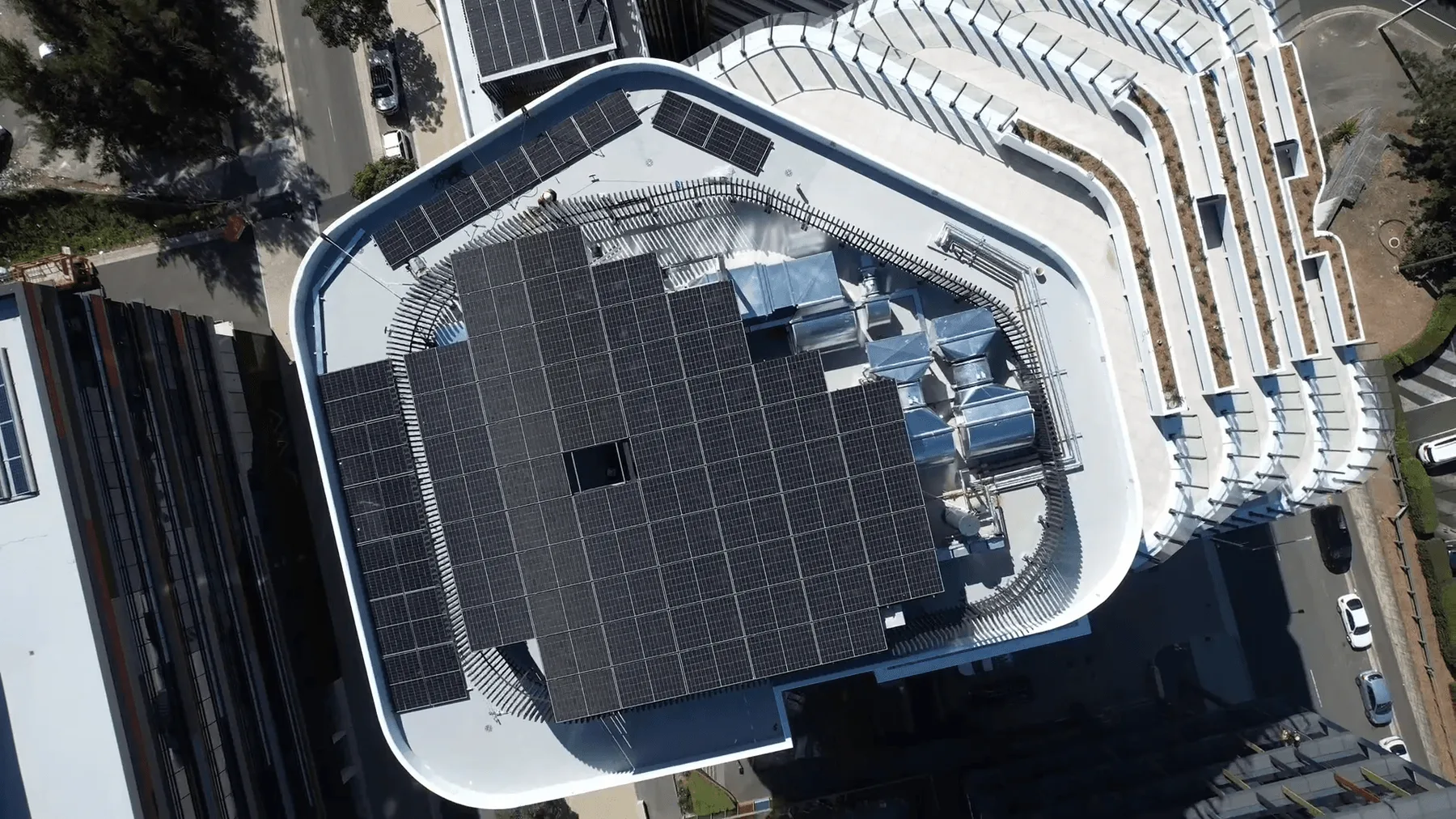
Nearly all of the work happens on a roof that the business does not use, with equipment that is not yet connected to anything. Panels are laid, rails are fixed, cabling is run and terminated, and none of it touches the live installation.
That is worth stating plainly because it contradicts the expectation most operators arrive with. A rooftop array is not a refit. For most of the programme the building carries on exactly as it did, with a crew working above a ceiling nobody looks at.
The live work is concentrated into one or two short, planned events. Everything else is a logistics problem: who needs to get where, when, and what they displace while they are there.
So the useful questions are different ones. Which areas the crew occupies and for how long. When the yard is unavailable. When the switchroom is occupied. And on which morning the site is off, for how long, and what has to be shut down cleanly before it.
Answer those four and a business can plan around the work. Ask only about downtime and the disruption arrives as a series of small surprises instead.
The exception is a site where the switchboard has to be modified or replaced before the array can connect. That is a larger piece of electrical work with a longer outage, and it should be identified during the survey and presented as its own item rather than folded into a solar programme.
The one genuine outage
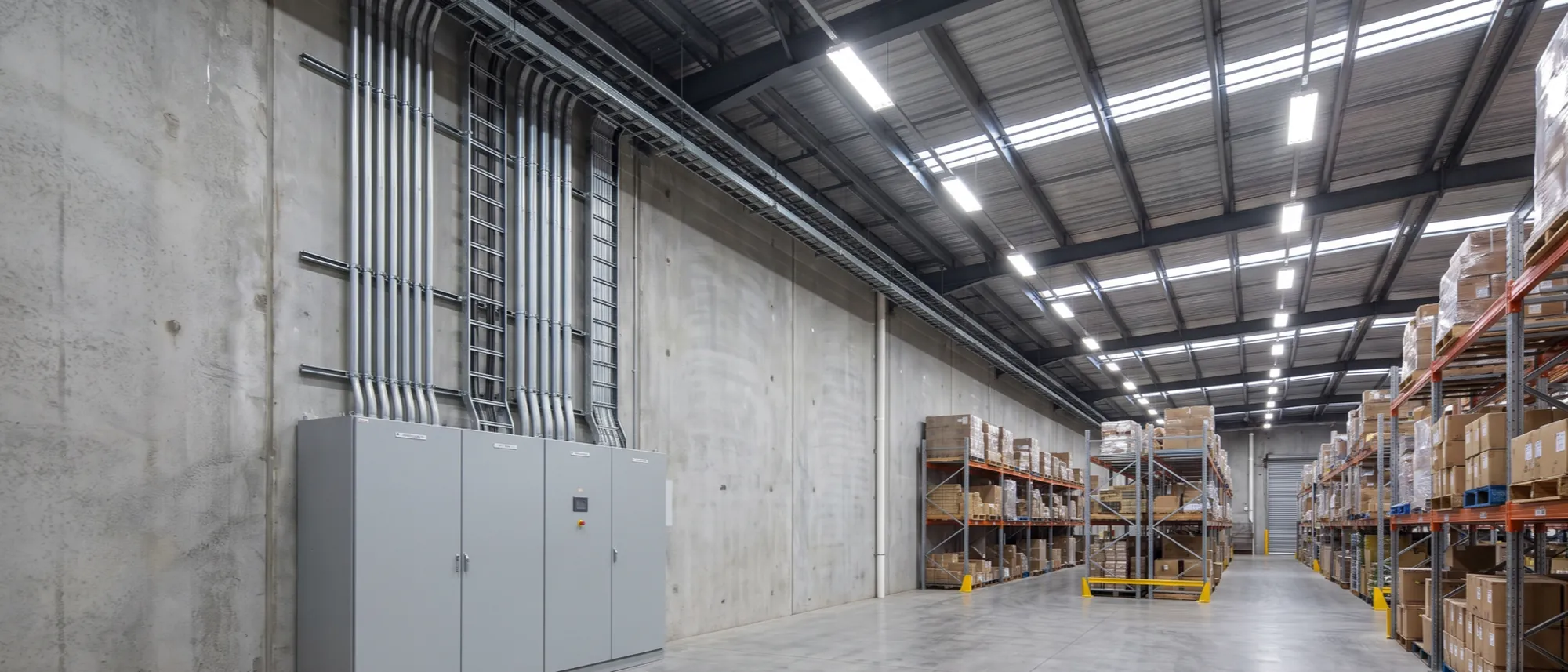
There is a point in every installation where the new equipment is connected to the existing switchboard, and that work usually requires the board to be isolated.
It is scheduled, it is short relative to the programme, and it is the only part of the job with a hard dependency on the business stopping. On most commercial sites it is booked for an early morning, a weekend or a shutdown period.
It is also the only part of the job that has to happen at a time the business chooses rather than a time the weather allows, which makes it the fixed point the rest of the programme is built around.
The length depends on what the board needs. A connection into a board with spare ways and current protection is a different event from a board that has to be modified or replaced first. Which of those applies is established when the board is opened during the survey, not on the day: see "Why the switchboard decides your solar programme".
What the site has to do in advance is more consequential than the duration. Anything that does not tolerate an unplanned stop needs a clean shutdown first: process equipment, refrigeration, servers, lifts, fire systems and anything holding a batch.
The outage is short. The preparation for it is what needs a week's notice.
Fire and security systems deserve a separate line, because they frequently have their own monitoring contracts and an isolation has to be logged with a third party before it happens rather than explained afterwards.
The other thing worth booking is a contingency window. If something in the board is not as expected, the choice on the morning is between an extension and a second outage, and the site is better placed if the extension was pre-agreed.
Access is the real cost
The rest of the programme is a sequence of access requirements, and each one displaces something the business normally does with that space.
- 01 Survey Roof, switchboard and plant room, for part of a day. Nothing is displaced. Ours
- 02 Set down A hardstand area for pallets, and a lift or crane window to get them onto the roof. Site
- 03 Roof works The longest phase. Roof only, with edge protection in place and access controlled. Ours
- 04 Electrical rough-in Cable routes through occupied space, ceilings and risers. Short, intrusive, noisy in places. Ours
- 05 Tie-in and commissioning The booked outage, then testing and settings with the system live. Ours and the network
Sequence and control, not durations. Step two is the one that most often collides with the site's own operations, because the yard is usually already doing something.
Step two is where most friction originates. Pallets of modules are heavy, they need a dry area, and getting them onto a roof needs either a crane with a lift plan or a goods lift with a weight limit. On a site with a single loading dock, that is the dock unavailable for a morning.
Step four is the one occupants notice. Running cable from the roof to the switchroom means ceilings, risers and occasionally a core drilled through a slab, and it happens inside the working environment rather than above it.
Neither is difficult to plan around. Both are difficult to plan around at short notice, which is why the programme should be agreed at contract rather than confirmed the week before.
Weather sits over the whole of it. Roof work stops in wind and rain, both for safety and because a wet metal deck is not a working surface. A programme that has no weather allowance in it is a programme that will move, and it is better to have the allowance stated than to renegotiate the dates each week.
What reaches the people in the building
Most of the disruption an occupant experiences is not electrical. It is noise, dust, restricted areas and unfamiliar people in high-visibility clothing.
It is also the part most easily managed, because almost all of it is predictable a fortnight ahead.
Noise is intermittent and concentrated: fixing rails, drilling penetrations, and the core drill if there is one. It is worth knowing which days those fall on, because a call centre and a warehouse have different tolerances.
Dust and debris are a housekeeping question with one exception. Swarf from drilling on a metal roof will rust if it is left, and it stains. A crew that magnet-sweeps the deck at the end of each day is doing something visible and worth specifying.
Exclusion zones underneath roof work are a safety requirement, not a courtesy, and they can close a walkway, a smoking area or a set of car spaces for the duration.
The management for all of this is a notice. A short message to occupants naming the dates, the areas affected, the noisy days and the outage morning removes most of the complaints before they are made.
Where the site has its own customers or visitors, the notice matters more. A sports facility, a showroom or a medical suite has people arriving who have no reason to expect access equipment, and signage at the entrance does more than an email ever will.
What a programme should commit to in writing
A commercial programme is a document, not an intention, and there are six things it should state plainly.
None of them is unusual to ask for, and a contractor who works on commercial sites will have all six to hand. The reason to ask in writing is that these are the items that get agreed verbally and then remembered differently.
| Item | What it should say |
|---|---|
| Outage window | Date, start, expected duration, and the contingency position |
| Working hours | On site hours, and which days carry noisy work |
| Areas occupied | Hardstand, crane or lift window, exclusion zones and their dates |
| Site rules | Inductions completed, safe work method statement provided, insurance current |
| Housekeeping | End-of-day clean, magnet sweep on metal decks, waste removal |
| Contact | One named site supervisor, reachable, for the duration |
A commitment list rather than a schedule. Durations are site-specific and belong in the programme itself.
The last row does more than the other five. A single named supervisor who answers the phone turns every small collision into a five-minute conversation rather than an escalation.
The first row is the only one with a financial consequence attached, and it is worth agreeing what happens if the outage runs long. Not as a penalty, but so that both parties know whether the answer is to continue or to stop and rebook.
Add a seventh where the site is leased or shared: who the contractor may speak to directly. On a multi-tenanted building, a crew asking the wrong occupant to move a vehicle creates an issue that takes longer to settle than the parking did.
The parts that run before anyone arrives
The longest lead times on a commercial installation are not on site at all, and they are frequently the reason a project that looked like weeks took months.
They are worth listing separately in the programme, because they run in parallel with each other and none of them can be compressed by adding people to the job.
The connection enquiry sits with the network and has its own timetable, which no contractor controls. It should be lodged at the start of the process rather than when the design is finished: see "Four numbers decide the array".
Structural sign-off sits with an engineer and depends on whether the building's original design documentation can be found. Where it can, the assessment is a review. Where it cannot, it is a survey.
Equipment lead times vary by product and are the easiest of the three to confirm. Ask for them in writing rather than as reassurance.
And where the site is leased, landlord consent for roof works belongs in the same early list. It is the item most likely to be assumed and least likely to be quick.
The practical consequence is a different reading of the schedule. A contractor quoting a two-week installation is describing the on-site phase. The elapsed time from signature to a generating system includes three approvals, and it is the number a business should be planning against.
After the crew leaves
Handover is not the last day on site. There is a short tail, and knowing about it prevents it being read as a problem.
Network sign-off and meter reconfiguration can follow commissioning rather than precede it, which means a system may be generating before the site's billing reflects it.
Seasonality confuses this further. A system commissioned in June is measured against its weakest months first, and an owner reading the first two months of output as a performance indicator will reach the wrong conclusion.
Monitoring needs a first month of data before it means anything, and the first fortnight of output is not a performance test.
There is usually a defects period, and it is worth walking the roof once inside it. Fixings, flashings, cable trays and labelling are all things a second look finds.
Then the documents. As-built drawings, string map, structural sign-off, connection approval, certificates of compliance and monitoring credentials in the site's own name. That set is what makes every future visit shorter, including the ones a decade from now.
Citations
Also consulted
-
Electrical and airconditioning licences NSW Fair Trading · primary The licence a person must hold to carry out electrical work in New South Wales, and the public register. fairtrading.nsw.gov.au
Keep reading
Quarter 3, in four pillars: the New Ability Energy quarterly
Nine pages on the quarter just gone: a new brand, two new partners, two storage projects and the incentives now open to business. Download the full…
Read GeneralEverything Electric Sydney, and how to leave with a straight answer
Everything Electric Sydney runs from 18 to 20 September at Sydney Olympic Park. Jonas Li from our team is volunteering with Renew in its Energy…
Read GeneralNew Ability Energy and BitWatt Energy sign strategic cooperation agreement
A strategic cooperation agreement signed on 11 September 2026, pairing New Ability Energy's engineering and project delivery with BitWatt Energy's…
Read