 New Ability Energy
Four numbers decide the array
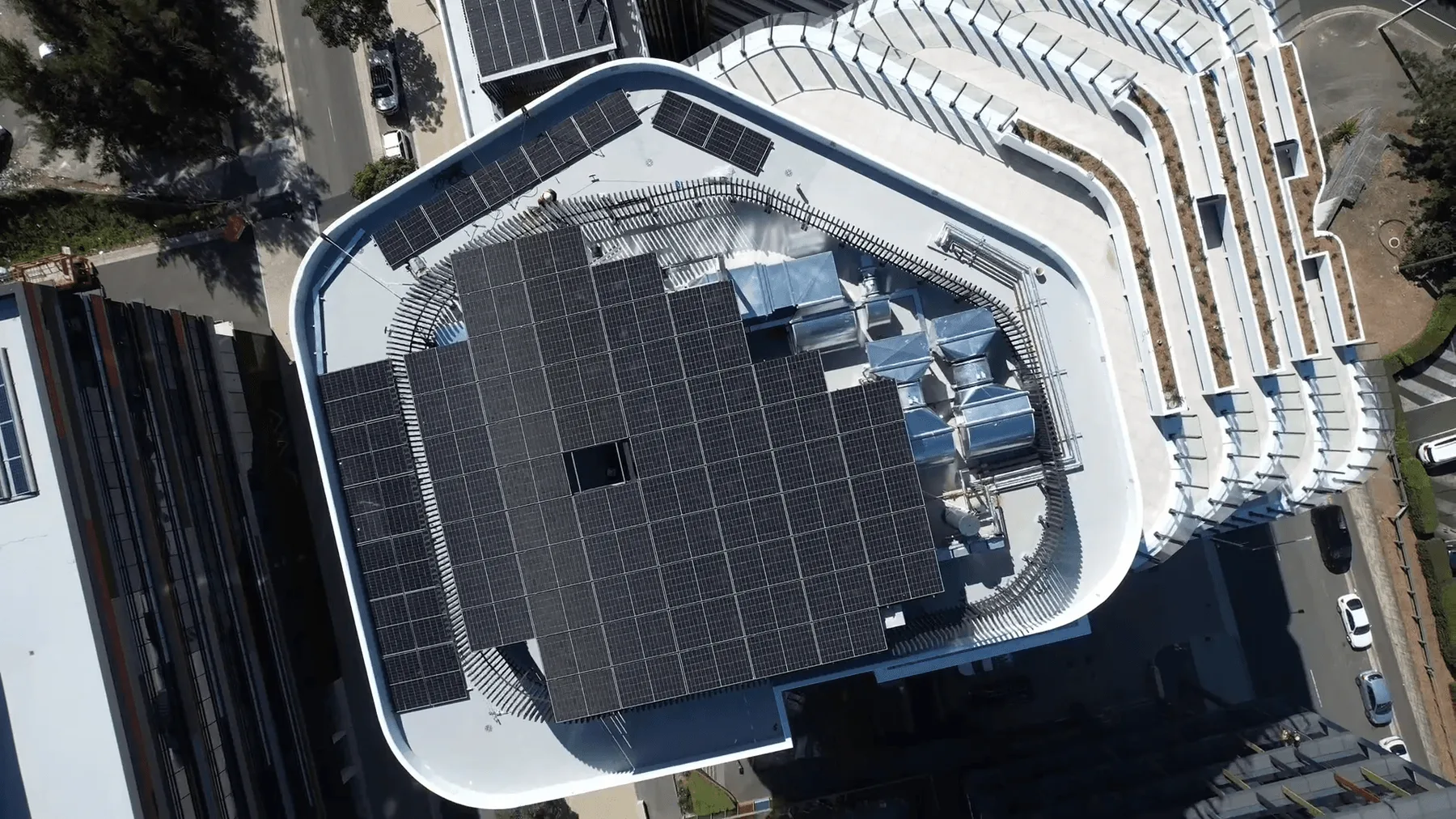
Usable roof area, load shape, switchboard headroom and the connection position set the system size between them. The roof is one of the four, and it is rarely the one that decides.
The ceiling moved, the roof did not
From 1 October 2026, subject to the regulations being made, the small-scale scheme's eligibility ceiling lifts from 100 kW to 1 MW1. Systems in that band create small-scale certificates rather than large-scale ones, which means the support is applied to the invoice instead of arriving as a revenue line somebody inside the business has to model and administer for years2.
That is a genuine change, and it has already started rearranging capital plans. What it does not change is the building. The roof is the same size it was in August. The switchboard has the same rating. The network will approve the same export, or it will not.
Government published estimates alongside the announcement, and they are worth looking at precisely because of how they get quoted back.
It is also worth stating what the change does not touch. An existing accredited large-scale system stays where it is, with no retrospective conversion. And nothing here alters what the network will approve a site to export, which remains the constraint that decides what actually goes on the roof.
Estimates published with the announcement, not entitlements3. What a particular site receives depends on its capacity, its installation date and the certificate price on the day.
Read those as estimates, because that is what they are. They scale with capacity, and capacity is the output of a design, not an input to one. A site that assumes the 500 kW figure and then discovers the board will carry 180 kW has not lost an entitlement. It never had one.
So the useful work is not modelling the certificate. It is establishing what the building can carry, which comes down to four numbers.
Four numbers, one array
Every commercial solar design resolves to the same four inputs. They are independent of each other, they are all knowable before anybody quotes anything, and three of them sit inside the building.
| The number | Where it comes from | What it decides |
|---|---|---|
| Usable roof area | A measured survey, not an aerial trace | How much array the structure can actually hold |
| Load shape | The building's own interval data | How much of the generation the site uses itself |
| Switchboard headroom | The board, opened and read | Whether the array connects, or the board is replaced first |
| Connection position | The network's response to an enquiry | What the site is permitted to export |
Three of the four are ours to establish. The fourth sits with the network, which is why it is lodged first rather than last.
Get all four and the system size falls out of them. Get three and you have a proposal with an assumption in it, and the assumption is usually the expensive one.
What follows is what each number actually involves, in the order the work happens.
Measure the roof
An aerial trace gives you a rectangle. A commercial roof is not a rectangle. It carries plant, penetrations, walkways, existing fall-arrest anchors, exclusion zones around vents and intakes, and a structural capacity that was calculated for the building it was, not the building it became.
The measured area and the estimated area on a commercial roof are routinely different, and the difference runs one way. Every item on that list subtracts.
The roof is a structural question before it is an area question.
The structural half matters more than the arithmetic. A deck that carries an array carries it in wind, and the point loads at the fixings are the ones an engineer signs off, not the total mass. In most cases the original design file will say exactly what the structure was assessed to hold, which turns a survey into a review and removes weeks from the front of the project.
This is also the number most likely to be wrong in a proposal you did not commission. It is the only one of the four that can be produced from a desk, so it regularly is.
Two further items belong in the same survey. Orientation and shading, because a plant room, a parapet or a neighbouring building removes generating hours from a section of the array rather than removing panels from the count. And the age of the roof itself, because an array has a service life measured in decades and a membrane may not. Installing over a deck that is due for replacement inside the system's life buys a removal and reinstallation that nobody has budgeted for.
Read the interval data
Interval data is the building's own record of when it draws power, at the resolution the meter records it. Your retailer holds it and will release it on request. It is the difference between knowing what the site spends and knowing what the site does.
An annual bill is an average of a shape. Two buildings with identical annual consumption can want completely different systems, because one draws steadily through the working day and the other runs a plant load for four hours and sits near idle the rest of the time.
What the data settles is how much of the generation the site consumes itself. That ratio is the whole business case on a commercial site, because self-consumed generation is worth the retail rate and exported generation is worth whatever the feed-in arrangement says it is worth. Those two numbers are not close to each other.
It also settles whether storage belongs in the scope at all, and if so, roughly what size. A site whose peak lands squarely inside its own generating hours has a smaller storage question than one whose peak lands at seven in the evening.
Ask the retailer for the data at the finest resolution the meter records, and for a full year of it. A quarter of data taken in one season describes that season. A full year carries the summer peak, the winter shape, the shutdown weeks and whatever the site does at the end of a financial year, and those are the periods that set both the array and any storage alongside it.
Open the switchboard
The switchboard is the number that stops projects, and it is almost never in the proposal that arrives by email.

Four things get read. The main switch rating, which sets the ceiling. The spare ways, because an array needs somewhere to land. The protection and its age, because a board installed to a superseded standard is a compliance item the moment it is worked on. And the general condition, which decides whether the sensible answer is an addition or a replacement.
A site that was sized to just under 100 kW a decade ago has a board that was sized for that system. Doubling the array on that roof is a switchboard question before it is a roof question, and a board upgrade is a real capital item with its own outage window and its own approval.
None of that is a reason not to proceed. It is a reason to know before the number goes to a board, rather than after.
Metering sits in the same inspection. What is installed, who owns it, and whether the arrangement supports the export the design assumes. It is a small item that becomes a schedule item when it is discovered late, because a meter change runs on the retailer's timeline rather than on the project's.
Lodge the connection enquiry early
The connection enquiry has the longest lead time of the four and the least control over its outcome. It is also the one most often left until the design is finished, which is the wrong order.
There are three answers. Approved as proposed. Approved with an export limit. Or network works required first, at a cost and on a timeline the network sets.
An export limit does not invalidate a design. It changes what the array is for. A limited site is optimised toward self-consumption and, often, toward storage, and that is a different system from the one drawn for a site that can export freely. Finding that out at the design stage is a design input. Finding it out after contract is a variation.
Nothing in the certificate changes any of this. The scheme decides how the support is delivered. The network decides what the site is allowed to do.
The enquiry itself is not onerous. It wants the site's National Metering Identifier, the proposed inverter capacity, the intended export position and the equipment being used. All four come out of the preliminary design, which means the enquiry can be lodged from a preliminary design rather than a final one.
This is a review, not a quote
The four numbers are a design review, and a design review has an output: a system size the building can actually carry, with the constraint that set it named alongside it.
That output is what belongs in a capex paper. A price without it is a price against an assumption, and the assumption is invisible to everybody reading the paper.
It also holds its value. Roof area, load shape, switchboard position and connection response do not expire with a scheme, a certificate price or a financial year. If the timing moves, the review still stands, and the site can contract from it whenever the decision is made.
It should be done by whoever will carry the installation, and by somebody tracking the regulator's notices rather than the headlines. Design, installation and compliance requirements for mid-scale solar have been flagged as still under consideration, with guidance to be published. A system designed against assumptions that then move is a system that gets re-engineered late, which is the expensive version of this project.
Reviewing the design before a capex round costs less than re-engineering it after one. That is the entire argument for doing the four numbers first.
Citations
-
01
Expansion of solar photovoltaic (PV) eligibility under the Small-scale Renewable Energy Scheme Clean Energy Regulator cer.gov.au
-
02
Small-scale Renewable Energy Scheme Clean Energy Regulator · primary, federal How small-scale technology certificates are created and applied, and what large-scale accreditation requires instead. cleanenergyregulator.gov.au
-
03
Putting more roofs to work Minister for Climate Change and Energy minister.dcceew.gov.au
Also consulted
-
Expansion of the small-scale scheme's solar eligibility to 1 MW Australian Government announcement · primary, federal The change to the eligibility ceiling from 1 October 2026, subject to the regulations being made, and the worked examples published with it. No public link confirmed. Cited by title and publisher.
Keep reading
Demand charges are a different bill
An energy charge bills the kilowatt hours a site used. A demand charge bills the single highest interval it reached. They respond to different…
Read TechnicalPower quality is the other half of the connection
A connection agreement says what a site may export. Power quality decides what it actually manages to. Voltage, power factor and harmonic content…
Read TechnicalSize it from the load, not the roof
Roof area tells you how many panels fit. The building's own consumption tells you which of them will ever pay for themselves, and whether the…
Read