 New Ability Energy
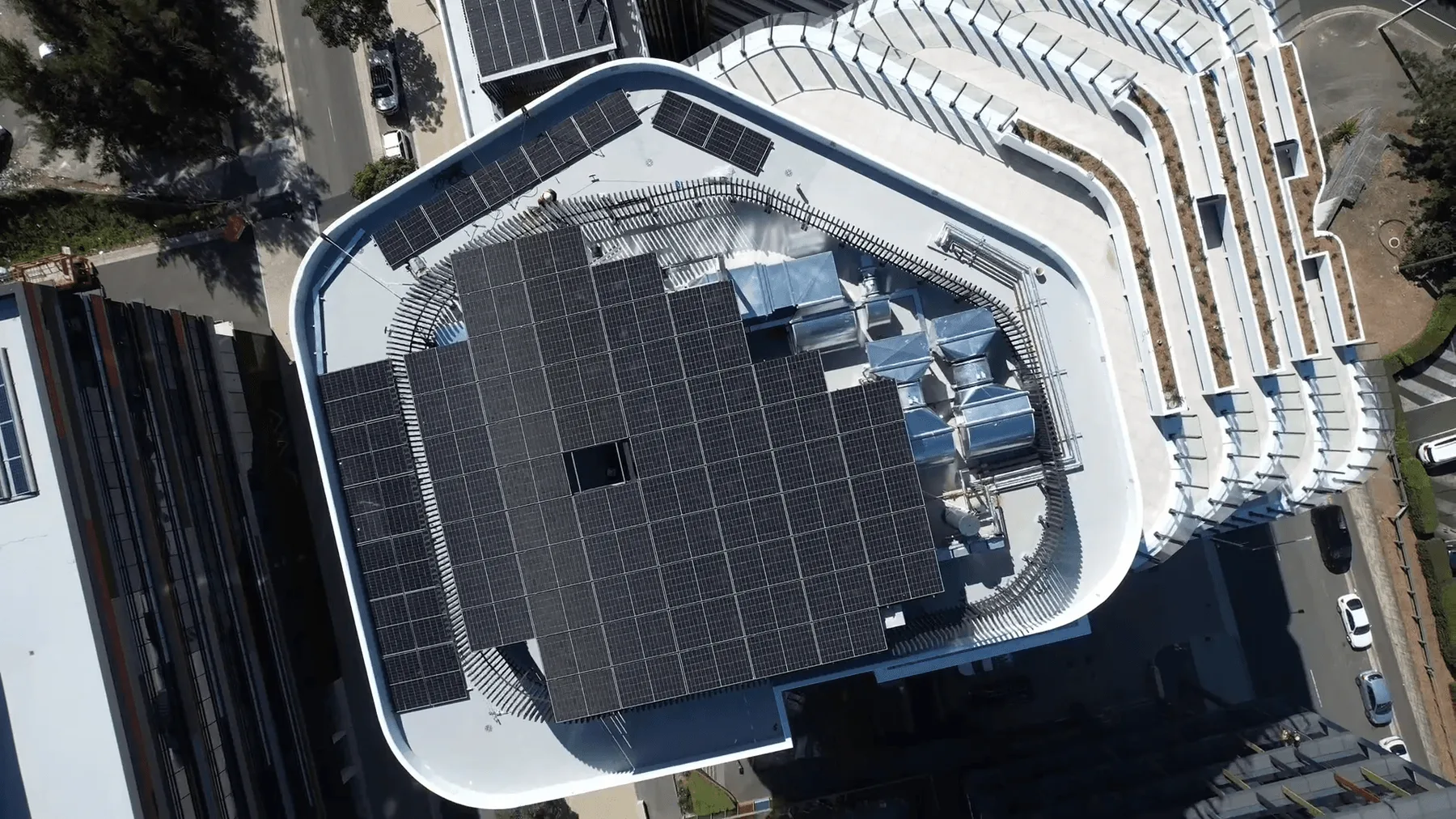
Plan the removal when you plan the array

A commercial array will be taken down at least once, usually before it stops working. What that costs is decided at design, by the fixings, the access and the contract, and almost never by the panels themselves.
An array outlives the roof under it
Panels carry performance warranties measured in decades. Roof membranes, coatings and older profiled decks frequently do not. On a building of any age, the array is the younger component sitting on top of the older one.
That mismatch is a common reason a commercial system comes off, and it has nothing to do with the system failing. The roof reaches the end of its life, the array is in the way, and somebody has to pay to move it.
The reason is not mysterious. Module warranties are written over long horizons because the failure mode is gradual output decline rather than sudden death. A roof coating, a membrane or an ageing profiled sheet is on a maintenance cycle measured in years, and that cycle was set before anybody proposed covering it.
The cost is not the panels. It is labour, access, isolation, storage, damage in handling, and the reinstallation afterwards with new fixings and new penetrations. On a large roof it is a project rather than a task.
None of that is a reason to delay a system. It is a reason to establish the condition and remaining life of the deck during the survey, before the layout is drawn. A roof due for replacement inside the array's service life changes the design, the mounting method and the commercial case, and it costs little to find out and far more to discover.
The same logic covers works nobody is thinking about at the time. Plant replacement, a lift overrun, a new extraction stack, a tenancy fit-out that wants a penetration exactly where a string runs. Every one of those is a partial removal.
There is a second mismatch underneath the first. The structural assessment that allowed the array is specific to the deck it was signed against. Replace the deck and the assessment does not transfer, so a relay is a fresh engineering question rather than a reversal of the original one.
That is not an argument for pessimism. It is an argument for asking one question during the survey: how old is this roof, and when is it next scheduled to be touched.
Three ways a system ends
"End of life" describes three quite different events, and they place the cost in three different years.
They also have different paperwork attached, which is the part that decides how painful each one is. A lift and relay needs drawings. A repower needs a new connection position. A decommission needs disposal evidence.
| Event | What triggers it | What it costs |
|---|---|---|
| Lift and relay | The roof under it is replaced or repaired | Removal, storage, reinstatement, new fixings and flashings |
| Repower | Newer modules are worth more than the roof space they free | Removal, disposal of the old modules, a new design and a new connection |
| Decommission | The building is sold, demolished or changes use | Removal, disposal, isolation and making good the roof |
Categories rather than measurements. The emphasised row is the one triggered by something other than the system, and the only one that is not a decision the owner chose to make.
The first row is worth sitting with. It is a likely outcome on any older roof, it is triggered by something other than the system, and it is the one nobody budgets for because the system still works perfectly on the day it happens.
A repower is the pleasant version. The modules come off because the roof space is worth more filled with something newer, which means somebody has run the numbers and decided in favour.
A decommission is the one where paperwork matters most, because the site is usually being handed to someone else and the evidence of what happened to the equipment travels with the transaction.
None of the three arrives without warning. A roof replacement appears on a maintenance schedule years ahead. A sale or change of use appears in a strategy long before it appears in a contract. A repower is a decision somebody makes when the numbers favour it.
Which means this is a planning problem rather than a risk. The events are known. What is usually missing is a document that says who does what when one of them happens.
Panels are electronic waste
Once a module comes off a roof it is electronic waste, and it is treated as such by a growing part of the regulatory system.
Victoria banned electronic waste from landfill in 2019, and panels fall inside that ban. Installers and retailers operating there are directed to take end-of-life panels to a lawful collection point or a photovoltaic recycler1. It is the clearest published position of any Australian state and the easiest one to point at.
At the national level, solar photovoltaic systems sit inside the federal work on product stewardship, the framework under which the costs of collection and recycling are pushed back toward the people who put the product on the market2.
It is worth being precise about what that means for a site in another state. Victoria's ban is a Victorian instrument and does not create an obligation in New South Wales. What it creates is a standard the market is already meeting, and a contractor working nationally already has the route in place.
For an operator in New South Wales the practical reading is straightforward. The direction of travel is settled even where the obligation is not yet written, and a recycling route that is voluntary today is the one that becomes mandatory later. Choosing a contractor who already has one costs nothing extra now.
Ask where the panels go before they come off, not after they are on a truck.
What is technically recoverable and what is routinely recovered are different questions, and the honest answer to the second one is that it depends entirely on where the modules are taken. The aluminium frame and the junction box are straightforward. Glass, the laminate and the cells need a facility built for them.
This is why the disposal route belongs in the contract rather than in a conversation. A contractor who names the facility, and who provides a receipt from it, has answered the question. One who says the panels will be recycled has not.
Inverters and batteries sit in the same category and are frequently forgotten, because they come off in ones rather than in hundreds. An inverter replaced under warranty is still electronic waste, and the replacement visit is the moment to ask where the old unit went.
Record it at the time. A disposal receipt filed with the maintenance record costs nothing and is the only version of this that survives a change of facilities manager.
The contract decides who carries it
Removal and disposal are almost never scoped in the original installation contract, because the original contract is about putting a system up.
That leaves three questions unanswered until the day they become urgent. Who removes the system. Who pays for the removal. And who holds the evidence that the equipment was disposed of lawfully.
The reason they stay unanswered is that none of the three is contentious while the system is working. They become contentious on the single day the system is in somebody's way.
On an owner-occupied site the answers are unpleasant but obvious. On a leased site they are neither. An array installed by a landlord on a roof the tenant occupies, feeding a tenancy meter, generating certificates assigned at installation, can have several parties with a view and no document that resolves them.
Resolve it once, in writing, at the point the system is built. What the landlord owns, what the tenant consumes, who removes the equipment at the end of the lease, and what condition the roof is handed back in.
The same paragraph should say what happens if the roof is replaced during the term, because that is the event most likely to actually occur.
Certificates add a wrinkle worth naming. Small-scale certificates are created at installation and are commonly assigned in exchange for the discount on the invoice3. They were settled at installation, and removing the equipment later does not change that.
None of this needs a long document. It needs four sentences, agreed once, held with the as-built drawings rather than in a lease nobody reads until it expires.
Design choices that set the removal cost
Most of what a removal costs is determined years earlier, by decisions that looked like installation details at the time.

Fixings first. Non-penetrating fixings, such as ballast on a concrete slab or seam clamps on a standing-seam deck, come off without reopening a single hole. A penetrating system on a large roof leaves as many holes as it made, each of which is a flashing to reinstate and a warranty position to check with the roofing contractor.
Then cable management. Cabling run in accessible trays, labelled at both ends, with a string layout that matches the drawings, turns a removal into a sequence. Cabling run to suit the day it was installed turns it into an investigation.
Then access. If the array can only be reached by a crane closing the loading dock, that constraint applies every time the roof is touched, not just on the day it was built.
And finally documentation. As-built drawings, string maps, the structural sign-off and the connection approval, held somewhere other than the inbox of whoever project-managed it. A removal without documents is a survey followed by a removal.
One more, and it is the least obvious. Layout density. An array laid tight to every parapet and skylight generates marginally more and makes every future access job harder, because there is nowhere to stand and nowhere to stage panels.
Leaving working clearances costs a small amount of annual output and saves a disproportionate amount of labour every time the roof is worked on. On a roof that will be touched several times across the array's life, that trade usually favours the clearance.
What to put in the scope now
None of this requires a decision about the distant future. It requires a handful of clauses and one survey finding, all obtainable while the system is still being designed.
Establish the age and remaining life of the roof during the survey, and record it against the design. If the deck is due for replacement inside the array's service life, either the roof comes first or the mounting method changes to suit.
Specify non-penetrating fixings where the roof allows them, and where it does not, specify the flashing detail and the roofing warranty position in the same document.
Require as-built drawings, a string map and labelled cabling as a condition of handover, not as a favour afterwards.
Ask the installer, in writing, what happens to modules they remove and where they are taken. Keep the answer.
The reason to do all of this is not only environmental, although that part is real. It is that every one of these items lowers the cost of the most likely future event, which is somebody needing to take a working system off a roof that has simply reached the end of its own life.
Citations
-
01
How to manage end-of-life solar photovoltaic systems Solar Victoria · primary Victoria's electronic waste landfill ban as it applies to panels, and the obligations it places on installers there. solar.vic.gov.au
-
02
Product stewardship schemes Department of Climate Change, Energy, the Environment and Water · primary, federal The product stewardship framework, and that solar photovoltaic systems sit inside the national work on it. dcceew.gov.au
-
03
Small-scale Renewable Energy Scheme Clean Energy Regulator · primary, federal How small-scale technology certificates are created and applied, and what large-scale accreditation requires instead. cleanenergyregulator.gov.au
Keep reading
Cut the load before you generate it
Load removed from a site needs no roof, no connection and no inverter. It works at night, it cannot be curtailed, and it makes every system that…
Read ESG & SustainabilitySelf-consumption moves scope 2, export does not
Scope 2 counts the electricity a site buys. Generation used on site cuts that number directly. Generation sent back out never entered it, and the…
Read ESG & SustainabilityClimate reporting starts at the meter
Australia's mandatory climate disclosure regime reaches mid-sized businesses for financial years beginning on or after 1 July 2027. The work that…
Read