 New Ability Energy
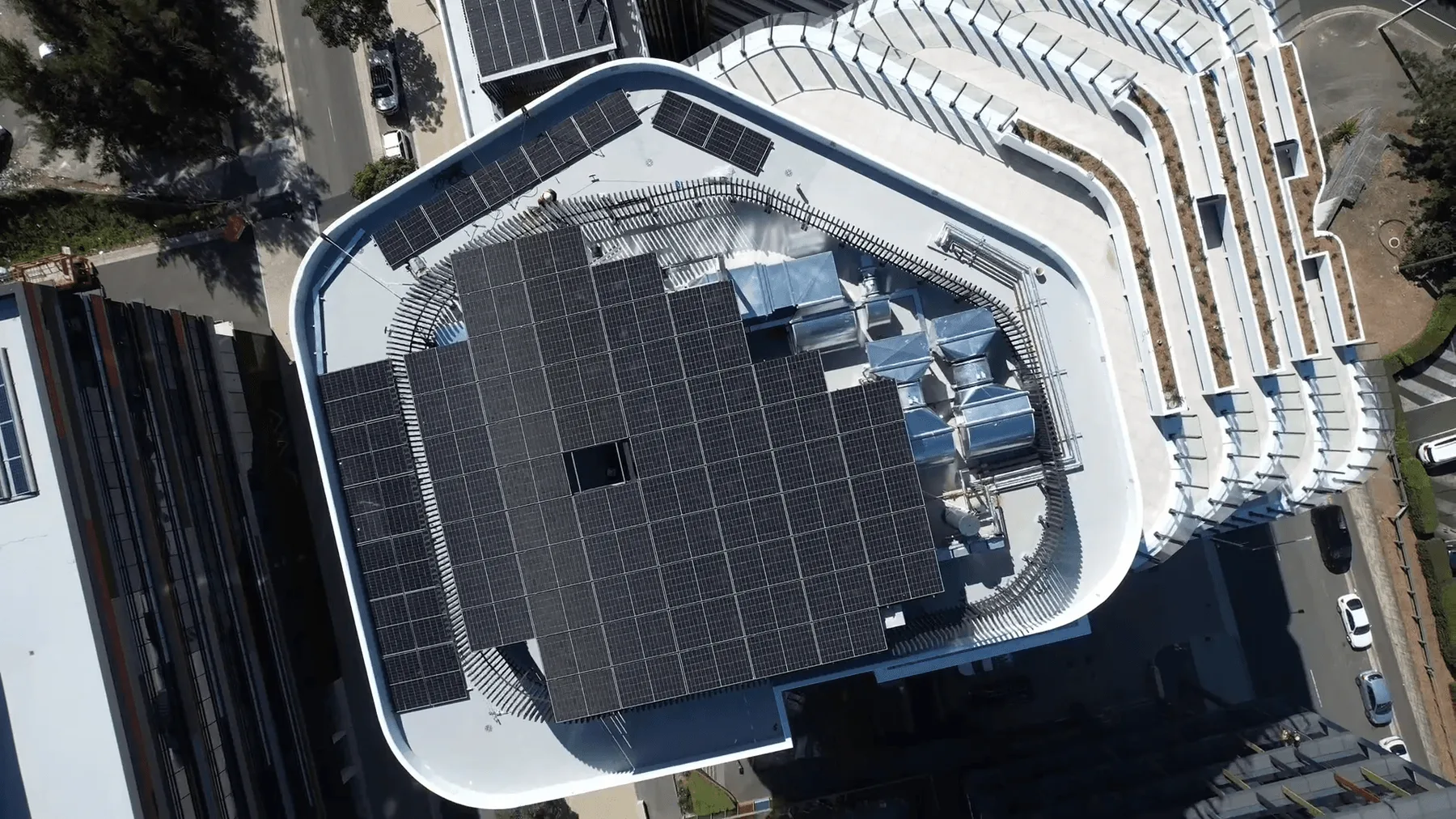
Self-consumption moves scope 2, export does not

Scope 2 counts the electricity a site buys. Generation used on site cuts that number directly. Generation sent back out never entered it, and the certificates created at installation decide whether the electricity can also be called renewable.
Scope 2 is a purchase
Scope 2 is the emissions released by somebody else to make the electricity your site buys. It is not what the building emits. It is what the grid emitted on the building's behalf.
It sits between two neighbours that behave differently. Scope 1 is what the site burns itself, in a boiler, a generator or a vehicle. Scope 3 is everything up and down the supply chain, which is the hardest to bound and the slowest to evidence. Scope 2 is the one in the middle, and it is the only one of the three that arrives every month with an invoice attached.
The calculation is two numbers multiplied together. How many kilowatt hours the site purchased, and the emissions factor that applies to them. The factors are published each year by the federal department and revised as the generation mix changes1.
That structure is worth holding on to, because it tells you exactly where a reduction can come from. Only two things move the result. Buy fewer kilowatt hours, or change what the purchased kilowatt hours are made of.
A rooftop array does the first of those, and only the first. It does not change the grid mix. It reduces how much of the grid mix the site has to buy.
One further feature of the arithmetic is worth knowing before anyone sets a target against it. The factor is not fixed. It is revised as the generation mix behind the meter changes, which means a site that consumed exactly the same electricity two years running can report a lower number in the second year without having done anything1.
That cuts both ways in a board paper. Part of the reduction a business reports is the grid decarbonising underneath it, and part of it is work the business actually did. Separating the two is straightforward if the consumption figure is held alongside the emissions figure, and impossible afterwards if it is not.
Everything that follows is a consequence of that one sentence, including the part most proposals get wrong.
Two methods, one inventory
There are two accepted ways to put a number on scope 2, and a site reporting seriously will end up with both.
The location-based method applies the published factor for the grid the site sits on1. It answers what the electricity actually caused, on average, in that region. It moves when the site consumes less, and when the grid gets cleaner.
The market-based method reflects what the organisation contracted for: a power purchase agreement, a retail product, or surrendered certificates. The Clean Energy Regulator publishes a guideline setting out how a voluntary market-based claim is made and what it may rest on2.
The gap between them is not a rounding difference. A site on a retail product backed by surrendered certificates can report a market-based figure near zero while its location-based figure sits at the regional average, because the electrons did not change and the contract did.
| Method | What it uses | What moves the number |
|---|---|---|
| Location-based | The published emissions factor for the grid region | Buying fewer kilowatt hours, or a cleaner grid |
| Market-based | Contracts and surrendered certificates | Buying fewer kilowatt hours, or different instruments |
| Both | Metered purchased electricity | Every kilowatt hour the site generates and consumes itself |
Method definitions from the published factors and the Clean Energy Regulator's voluntary market-based guideline12. The emphasised row is the only one a rooftop array acts on directly.
The two methods answer different questions, so they routinely produce different numbers for the same year. Neither is the corrected version of the other.
The row worth noticing is the third. Purchased electricity is the input to both calculations. Reduce it and both figures fall, with no contract, no instrument and no claim to defend.
A power purchase agreement sits on the market-based side of that line. What it delivers to the inventory depends on whether the certificates travel with the electricity or are sold separately, which is a contract question rather than an energy one.
None of that is a reason to prefer one method. It is a reason to know which method a claim was built on before repeating it, because the two are not interchangeable and the difference is usually the entire story.
Self-consumption does the work
A kilowatt hour generated on the roof and used in the building at the same moment is a kilowatt hour the site never bought. It is absent from the meter reading that feeds the inventory.
That is the whole mechanism, and it is why the self-consumption ratio is the emissions number as well as the financial one. The same ratio that decides whether an array pays for itself decides how much of it reaches the report.
It is also the only reduction available that requires no counterparty. No retailer has to agree to it, no certificate has to be surrendered, and no contract has to be renewed each year for it to keep working.
A kilowatt hour you never bought is the only one that leaves the inventory under both methods.
Self-consumption is set by the shape of the load, not by the size of the array. A site drawing steadily through daylight hours converts most of its generation. A site whose demand arrives after dark converts very little of it, however many panels are on the roof.
Which load shape a building has is knowable before anything is designed, from its own interval data. That is a separate subject and another post owns it: see "Size it from the load, not the roof".
For this post the point is narrower. If the objective includes scope 2, the design target is the self-consumption ratio, and capacity is only the means.
Orientation matters here for a reason that is easy to miss. It changes when the generation arrives, not only how much of it there is. A west-facing section produces less across the year and more of it late in the day, and on a site whose demand peaks at four in the afternoon the later output is worth more to this number than the larger total would have been.
Shading behaves the same way. A plant room that clips the array for two hours each morning removes generating hours from the part of the day the building was already drawing, which is the expensive part of the day to lose.
Export leaves your inventory, not the atmosphere
Exported generation is not purchased electricity. It was never inside scope 2, so removing it takes nothing out.
It does displace generation elsewhere on the network, and that is a real reduction. It lands on somebody else's account, because it becomes somebody else's purchased electricity at a slightly cleaner average.
This is where a capacity headline and an emissions headline stop agreeing. An array that exports half its output reduces the site's own scope 2 by roughly what an array half its size, fully consumed, would have.
There is a network dimension to this as well. What a site is permitted to export is settled by the connection, not by the roof, and a site with a tight export limit curtails whatever it cannot use. Its self-consumption ratio looks high by necessity, but the generation it was not allowed to export is simply lost rather than converted.
None of that argues against export. It argues against reporting export as though it were abatement inside the organisation's own boundary. Counting it twice, once as your reduction and once as the buyer's cleaner supply, is the error the accounting methods exist to prevent.
So an array designed for a reporting objective and an array designed for a feed-in tariff are not the same array, and the difference shows up in the size.
The connection position is one of the four inputs that set a system size, and another post owns that ground: see "Four numbers decide the array".
For the inventory the rule stays simple. Report what the meter says the site bought, and let the exported kilowatt hours be counted by whoever bought them.
The certificate decides the claim
There is a second question sitting underneath the first, and it is the one that catches reporting teams out. Reducing purchased electricity is one thing. Calling the remaining electricity renewable is another.
Certificates are what separate them. Under the small-scale scheme, certificates are created when a system is installed and are commonly assigned in return for the discount that appears on the invoice3. Under the large-scale target, an accredited power station creates one certificate per megawatt hour generated4.
The discount is the part that makes this counter-intuitive. A business that has never heard of a certificate may still have sold one, because assigning it is how the reduction reached the invoice in the first place.
Where certificates created by a system have been sold, the attribute they carry has gone with them. The generation still reduces purchased electricity, because the meter cannot be argued with. The separate statement that the electricity was renewable is no longer available for those kilowatt hours.
For a voluntary market-based claim, the Clean Energy Regulator's guideline sets out which instruments are eligible, and large-scale generation certificates, renewable energy guarantee of origin certificates and GreenPower are the ones commonly used25.
The practical instruction is short. Before a renewable claim appears in a report, establish what happened to the certificates for that system, and check the treatment against the guideline rather than against the proposal that sold it.
Leases add a second layer. Where a landlord installs an array and a tenant consumes the output, the reduction shows up in the tenant's purchased electricity while the asset and often the certificates sit with the landlord. Both parties can describe the same system honestly and still not both claim the same kilowatt hours.
Settle that in writing at the point the system is built. It is a paragraph in a lease variation at the start and an argument between two sets of auditors later.
Measure it from the meter
An emissions inventory is built from measurements. A design model is a forecast, and a forecast is not a disclosure.
Three quantities have to be recorded separately for the reporting to work: what the site imported, what the array generated, and what the site exported. Self-consumption is generation minus export, and it cannot be derived without both.
The revenue meter records import and export at the connection point. The inverter records what the array made. Neither on its own tells you what the building used.
The gap is usually the generation figure. Plenty of commissioned systems rely on the inverter's own reading, which is close enough to be believed and not always close enough to be audited.
A dedicated generation meter is inexpensive at commissioning and awkward afterwards, because it means returning to a live board. It belongs in the scope of work, in writing, before the system is energised.
Ask for the reporting interval as well. Monthly totals cannot show a self-consumption ratio. Interval data can, and it is the same resolution the load study used, so the commissioned system can be measured against the assumptions it was sold on.
Keep the data as well as the summaries. Retailers hold interval data for a limited period and a request made three years later is a different conversation from one made in the same quarter.
And record the system's own details next to its readings: capacity, commissioning date, inverter make, and whether certificates were created and assigned. Those four facts answer most of the questions an assurance review asks about a generation asset, and none of them are recoverable quickly once the people who arranged the install have moved on.
Name the trade-off before it is discovered
Designing for self-consumption frequently produces a smaller array than the roof would carry, and that is an uncomfortable conversation to have late.
Storage changes the arithmetic by moving generation into hours the site is drawing, which converts export into self-consumption. It earns its place on the same evidence, and another post carries the detail: see "Sizing solar and storage together".
The conversation gets easier when the two objectives are separated on the page. Capacity is what the roof can carry. Self-consumption is what the business can use. A proposal that prints both, and names which one it was optimised for, has already had the argument.
Where a site genuinely cannot consume what its roof could generate, export is the right answer and the reporting should say so plainly. A smaller reduction reported accurately is worth more than a larger one that does not survive review.
That is the honest position, and it is easier to hold at the design stage than in the year the disclosure is first assured.
Citations
-
01
Australian National Greenhouse Accounts Factors Department of Climate Change, Energy, the Environment and Water · primary, federal The published emissions factors used for the location-based method, and the note that they are revised annually. dcceew.gov.au
-
02
Voluntary market-based scope 2 emissions guideline Clean Energy Regulator · primary, federal The market-based method, and which certificates count toward a renewable electricity claim. cer.gov.au
-
03
Small-scale Renewable Energy Scheme Clean Energy Regulator · primary, federal How small-scale technology certificates are created and applied, and what large-scale accreditation requires instead. cleanenergyregulator.gov.au
-
04
Large-scale Renewable Energy Target Clean Energy Regulator · primary, federal Large-scale generation certificates, how they are created and what surrendering one does. cleanenergyregulator.gov.au
-
05
GreenPower GreenPower, on behalf of the participating state and territory governments · primary GreenPower as one of the instruments a market-based claim may rest on. greenpower.gov.au
Keep reading
Plan the removal when you plan the array
A commercial array will be taken down at least once, usually before it stops working. What that costs is decided at design, by the fixings, the…
Read ESG & SustainabilityCut the load before you generate it
Load removed from a site needs no roof, no connection and no inverter. It works at night, it cannot be curtailed, and it makes every system that…
Read ESG & SustainabilityClimate reporting starts at the meter
Australia's mandatory climate disclosure regime reaches mid-sized businesses for financial years beginning on or after 1 July 2027. The work that…
Read